
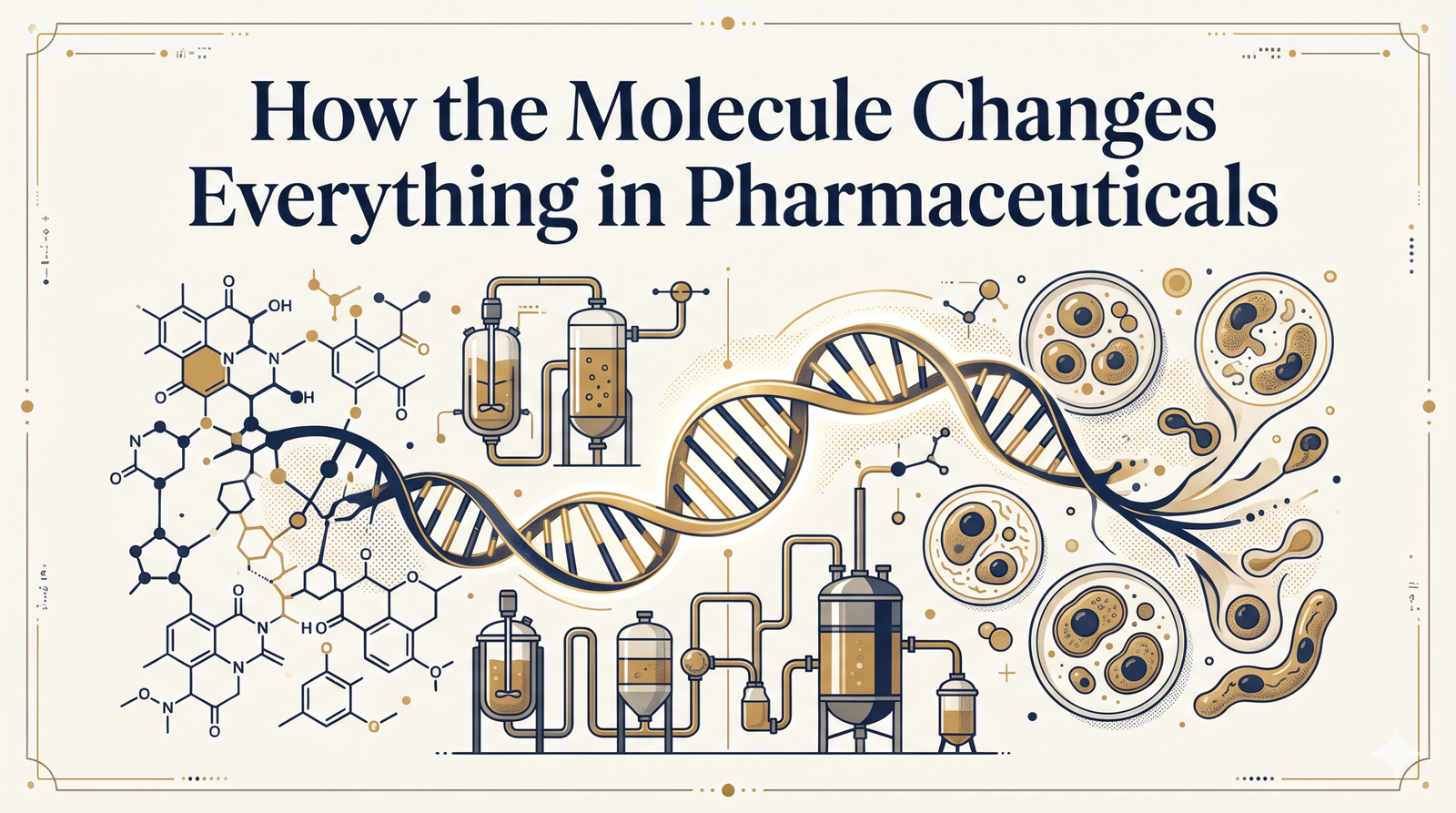
In the previous chapter, we ended with a simple question: What exactly are we manufacturing in CDMO labs?
That question matters because a pharmaceutical company is not really manufacturing “a drug”. It is manufacturing a process – one capable of reproducing that molecule consistently, at scale, and within a tightly controlled specification every single time and that process changes dramatically depending on the nature of the molecule itself:
| Nature of Molecules | Process Chemistry |
|---|---|
| Small-Molecule APIs | A conventional small-molecule API may require a sequences of organic chemical synthesis, multi-stage separations, and precise crystallization. |
| Monoclonal Antibodies (mAbs) | A monoclonal antibody requires living host cells, bioreactor systems, complex purification trains, and strict biological process controls. |
| Antibody-Drug Conjugates (ADCs) | An antibody-drug conjugate combine both worlds, linking target-specific biopharmaceuticals with highly potent chemical payloads. |
| RNA Therapies | The RNA therapy introduces an entirely new manufacturing architecture built on synthetic biology and lipid nanoparticle encapsulation. |
| Cell & Gene Therapies | Cell and Gene Therapies often turn the model completely inward – effectively manufacturing the patient’s own biological cells. |
The takeaway is simple: the molecule determines the factory lab. And as modern medicine diversifies, the nature of the molecule increasingly dictates the capabilities a CRDMO must build to survive.
1. Small Molecules: Chemistry at Scale
Small-molecule drugs remain the traditional foundation of the pharmaceutical manufacturing industry. Built on precise, highly reproducible chemical synthesis, their production relies on well-established principles of organic chemistry.
The manufacturing workflow follows a defined chemical sequence:
| Manufacturing | Process Workflow |
|---|---|
| Reaction & Synthesis | Raw starting materials undergo a series of controlled chemical reactions to construct the core molecular structure. |
| Isolation of Intermediates | At each stage, chemical intermediates are separated, purified, and verified before moving to subsequent steps. |
| Final API Crystallisation | The purified intermediate is converted into the final Active Pharmaceutical Ingredient (API), typically isolated through crystallization to achieve the required purity and solid-state form. |
| Formulation & Dosage | The API is ultimately combined with excipients and formulated into the final dosage form such as tablets, capsules, or injectables. |
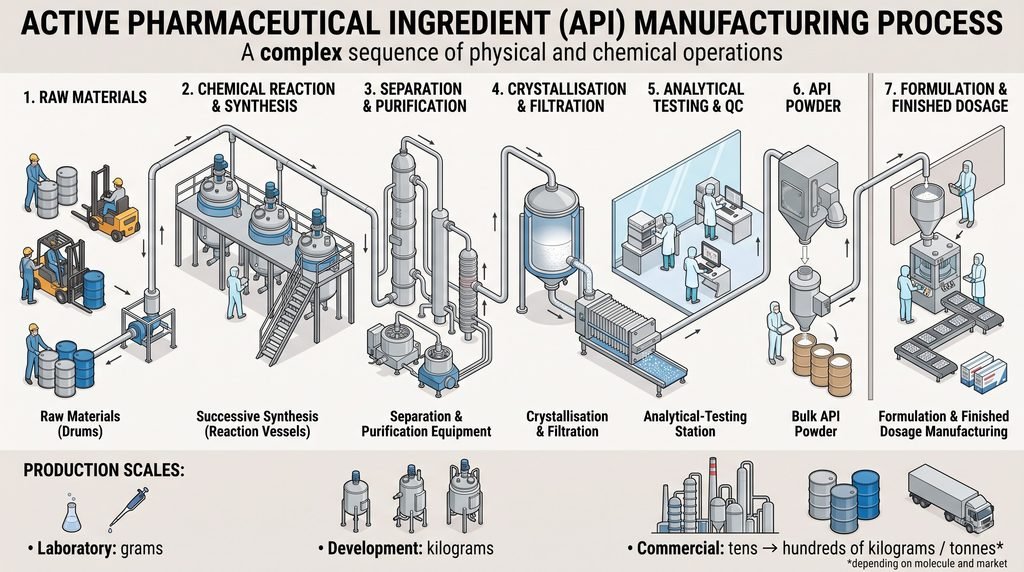
Because small molecules are defined by exact chemical structures, their manufacturing processes can be meticulously standardized, validated, and scaled across standard chemical synthesis facilities.
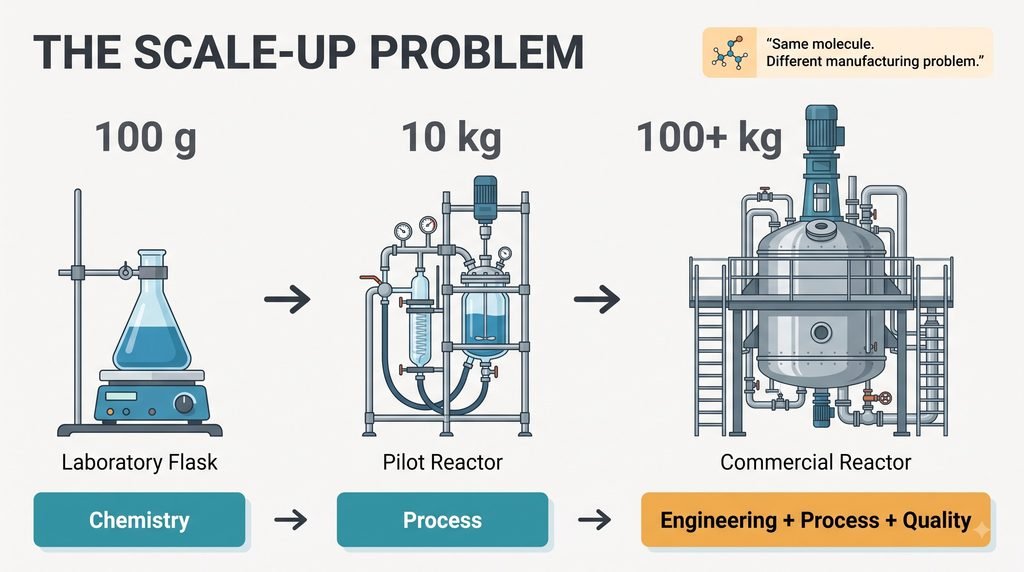
The chemistry itself is not the hard part, The hard part is making it repeatable. At laboratory scale, you optimize a reaction around a flask. At commercial scale, you have to manage:
Thermodynamics & Kinetics: Heat transfer, localized hot spots, and reaction speeds.
Fluid Dynamics: Uniform mass transfer and mixing in large volumes.
Yield & Purity: Impurity formation, pressure control, and crystallization.
Resource Management: Solvent recovery, waste, and process mass intensity.
Compliance & Safety: Worker safety, batch reproducibility, and cGMP controls.
A reaction that works perfectly at 100 grams can behave unpredictably in a 5,000-liter reactor. This is why process chemistry is central to the CRDMO model. The sponsor brings the target molecule; the CRDMO figures out how to manufacture it economically and reliably at scale.
2. The Chemistry Gets Harder
It is tempting to categorize the industry strictly by size, dividing it into simple small molecules and complicated large molecules. However, that binary classification will be an oversimplification. Small molecules alone have vastly different manufacturing requirements depending on their specific chemical makeup.
As synthesis progresses from simple, single-step reactions to multi-step synthesis, chiral chemistry, highly potent molecules, and ultimately complex conjugates, each phase introduces steep new capability requirements.
For instance, a molecule requiring five reaction steps is not the same manufacturing proposition as one requiring fifteen. Similarly, a highly potent oncology compound requires specialized containment environments, despite remaining a “small” molecule. Add in the sophisticated stereochemical control needed for chiral molecules, or the rigorous purification processes required for compounds with ultra-low impurity limits, and the operational demands multiply.
The reality is that molecular size is only one dimension of a highly complex manufacturing landscape.
3. Large Molecules: When Chemistry Becomes Biology
Now consider a monoclonal antibody. The manufacturing problem changes completely. Instead of assembling the molecule primarily through a sequence of chemical reactions, the manufacturer uses a biological production system.
A simplified manufacturing chain looks like this:
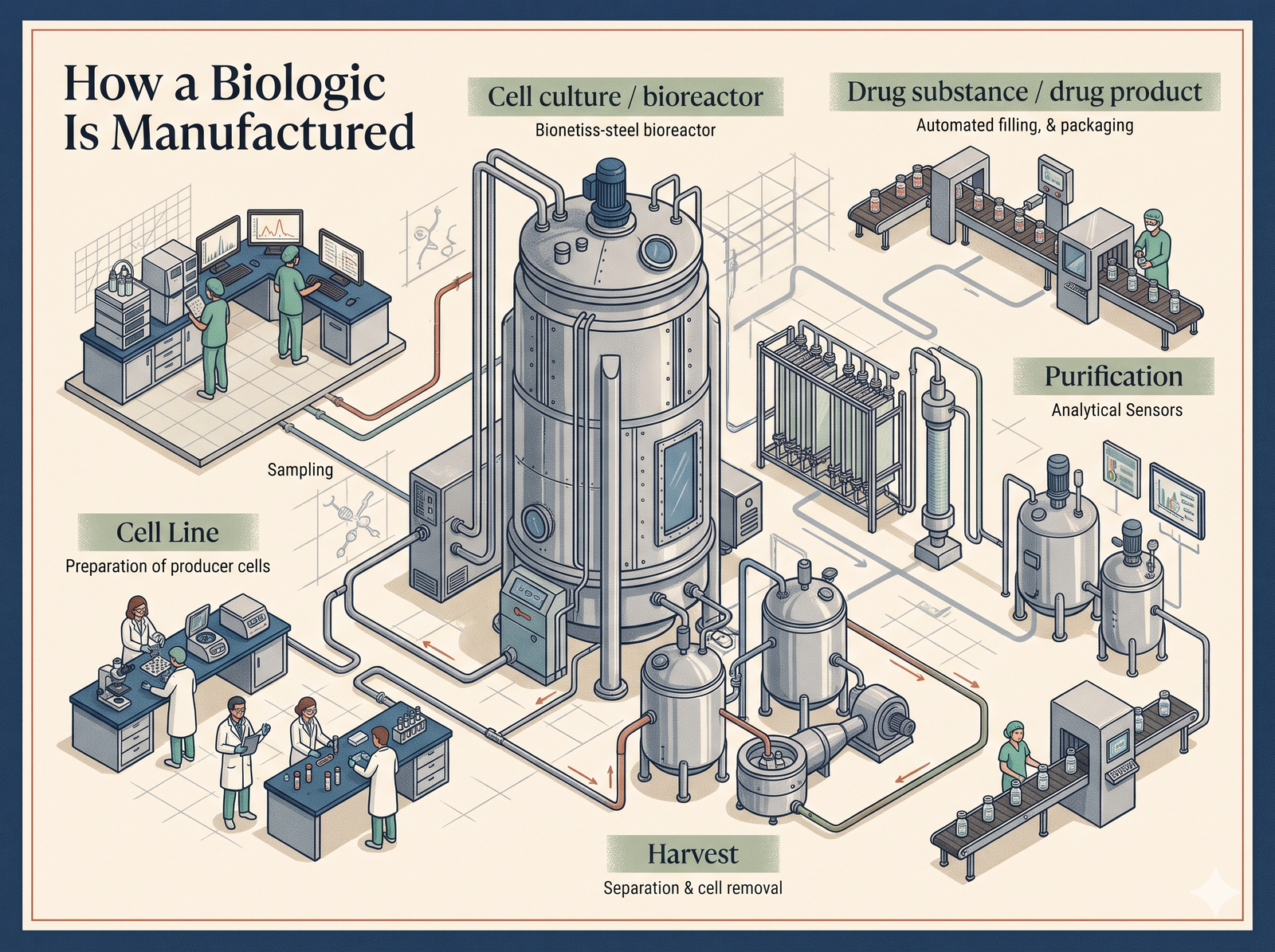
A biologic is generally a large, complex molecule produced using living systems.
US FDA describes biologics as generally large and complex, and notes that their manufacturing, purification and processing are consequently more complicated than those of conventional small-molecule drugs.
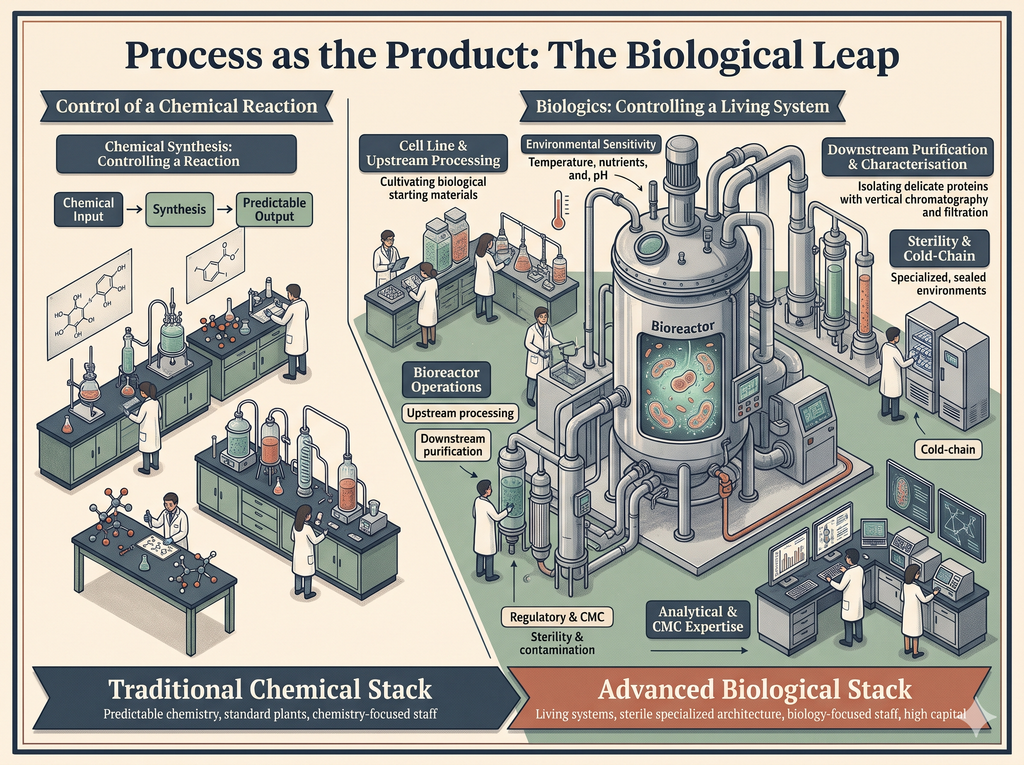
In the world of biologics, the process is the product. Unlike the predictable physics of chemical synthesis, biological manufacturing is a delicate dance with life itself and living cells are notoriously temperamental.
Any shift in the environment from a microscopic fluctuation in bioreactor temperature to a tiny change in nutrient levels—can fundamentally alter how these cells grow, how they behave, and ultimately, the complex proteins they produce. As the FDA cautions, even minor variations in bioreactor conditions can unexpectedly compromise cell growth and product quality. Controlling these systems isn’t just about monitoring a reaction; it is about keeping a living system in perfect, fragile equilibrium.
To manage this, manufacturers cannot rely on traditional pharmaceutical infrastructure. They need an entirely new, highly specialized capability stack:
Cell-Line Expertise & Upstream Processing: Cultivating and nurturing the biological starting material.
Bioreactor Operations: Maintaining the precise, large-scale environmental conditions required for living systems.
Downstream Purification: Isolating and harvesting delicate proteins without damaging them.
Advanced Analytical Characterization: Continuously verifying the molecular structure of the output.
Sterility, Contamination, & Cold-Chain Control: Guarding against biological intruders and preserving temperature-sensitive products.
Regulatory & CMC (Chemistry, Manufacturing, and Controls) Expertise: Navigating the stringent oversight governing living therapeutics.
Everything about this paradigm is distinct. The facilities require specialized, sterile architectures. The scientists must think like biologists rather than chemists. The equipment is far more complex, the quality systems are relentlessly exacting, and consequently, the capital required to build and sustain these capabilities is on an entirely different scale.
4. The Difference Is Bigger Than Molecular Weight
The FDA provides a stark framework for understanding this distinction. Small molecules are typically well-defined and synthesized chemically. In contrast, biological products are incredibly complex, heterogeneous, and cultivated within living systems, making them inherently more difficult to fully characterize and control.
This divergence is most obvious in physical scale: the FDA notes that a single biologic can weigh over 800 times as much as a conventional small-molecule drug like aspirin. However, sheer molecular weight is merely a proxy for the real challenge. The true differentiator is how this immense structural complexity completely redefines the manufacturing process.
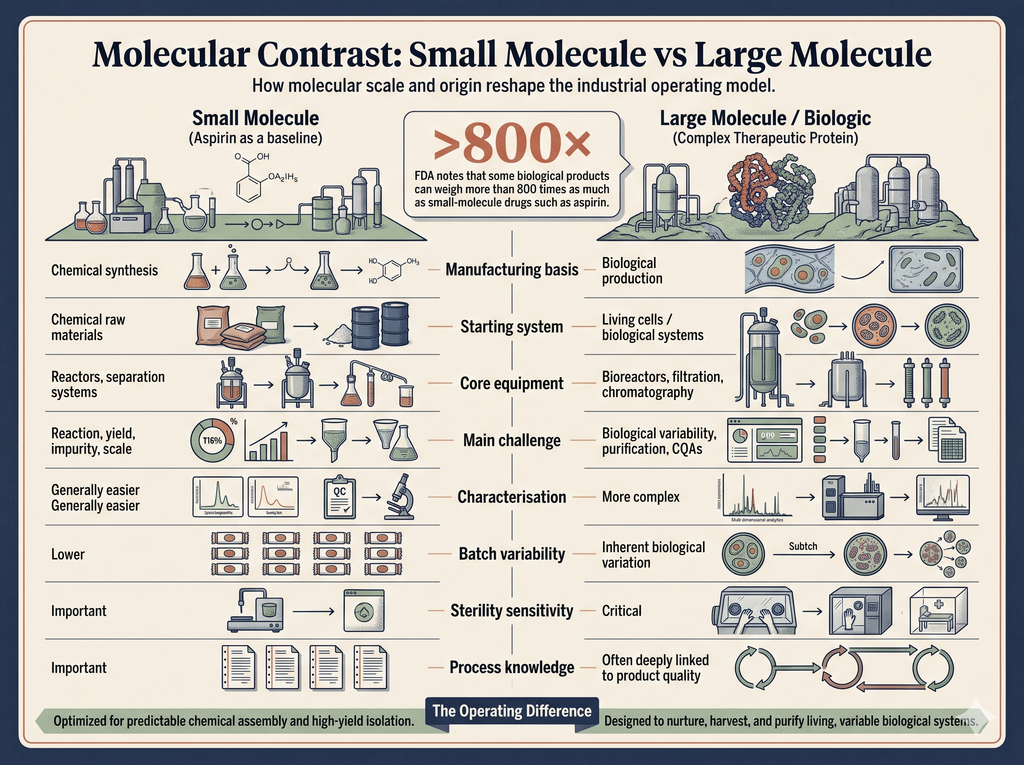
The implications for outsourcing are profound. A pharmaceutical company expanding into biologics cannot simply build another factory; it must adopt an entirely new manufacturing ecosystem, creating massive barriers to entry for traditional drugmakers. Yet, an even more complex challenge is emerging: the pharmaceutical landscape is no longer neatly divided into a simple binary of “small” and “large” molecules.
5 Beyond the Binary: Why “Small vs. Large” Is Obsolete
The pharmaceutical landscape has evolved far beyond the traditional “small versus large” binary. Today’s therapeutic pipeline is defined by an expanding array of advanced modalities, each defying historical classifications and demanding entirely new manufacturing paradigms.
Consider the current spectrum of innovation:
Peptides: While physically smaller than typical monoclonal antibodies, they still demand highly specialized synthesis and intricate purification processes.
Antibody-Drug Conjugates (ADCs): These sophisticated therapies bridge the historical divide, chemically linking a highly potent small-molecule toxic payload to a large biological targeting vehicle.
RNA Therapeutics: Defying conventional categories entirely, RNA fits neither the traditional small-molecule API nor the standard monoclonal antibody profile.
Gene and Cell Therapies: These push the boundaries even further, utilizing viral vectors to deliver genetic material or engineering living cells to act as the therapy itself.
These innovations are not just a linear progression in molecular weight. They are fundamentally distinct therapeutic modalities. For the industry, the implication is stark: every new modality introduces a bespoke, highly complex manufacturing challenge that cannot be solved with legacy infrastructure.
6. The Modality Map
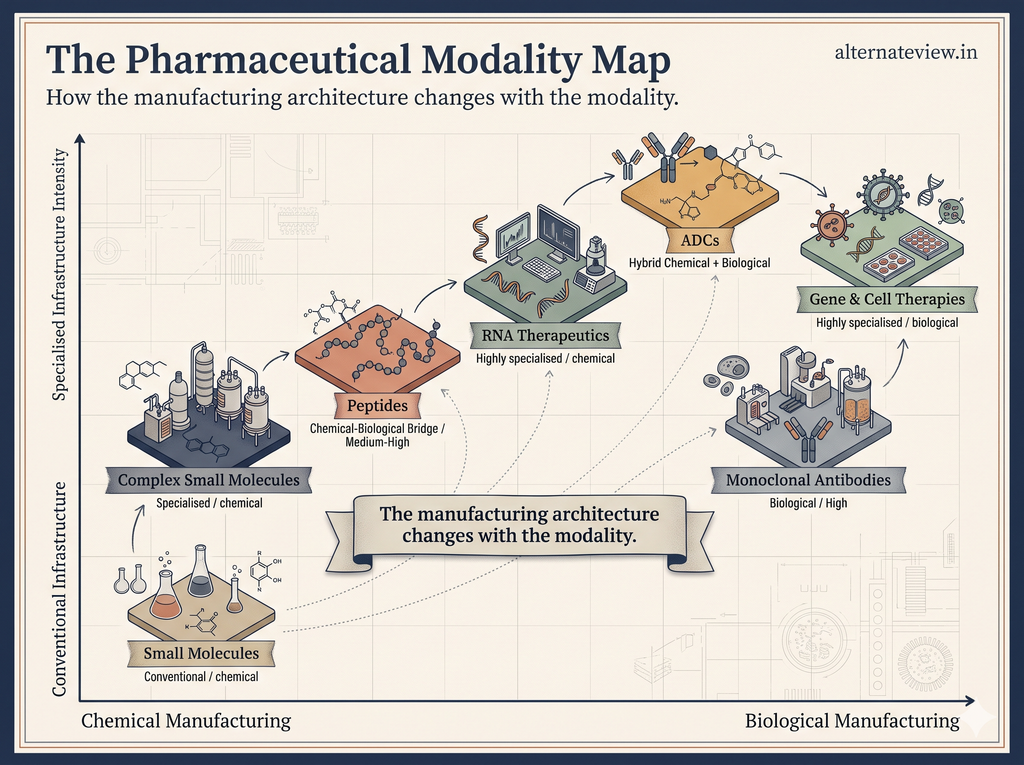
This is where the industry narrative becomes truly compelling. Rather than viewing the pharmaceutical landscape as a simple linear progression from “small” to “large,” it is far more accurate to visualize it as a diverse, multi-dimensional map of distinct manufacturing architectures.
This structural distinction has massive implications for the Contract Research, Development, and Manufacturing Organization (CRDMO) sector. A partner with decades of entrenched expertise in small-molecule chemistry possesses a highly specific capability stack. A facility engineered for monoclonal antibodies requires an entirely different operational foundation. Meanwhile, producing Antibody-Drug Conjugates (ADCs) demands a seamless, high-wire integration of both.This paradigm shift poses a critical strategic question for the industry: Can an established CRDMO effectively pivot and transfer its legacy capabilities into advanced modalities, or does every new therapeutic class require building a bespoke business from the ground up?
2.7 Peptides: The Bridge
To understand why some of the biggest corporate acquisitions are happening in the pharmaceutical space, we must first understand a molecular “identity crisis.”
Enter the peptide.
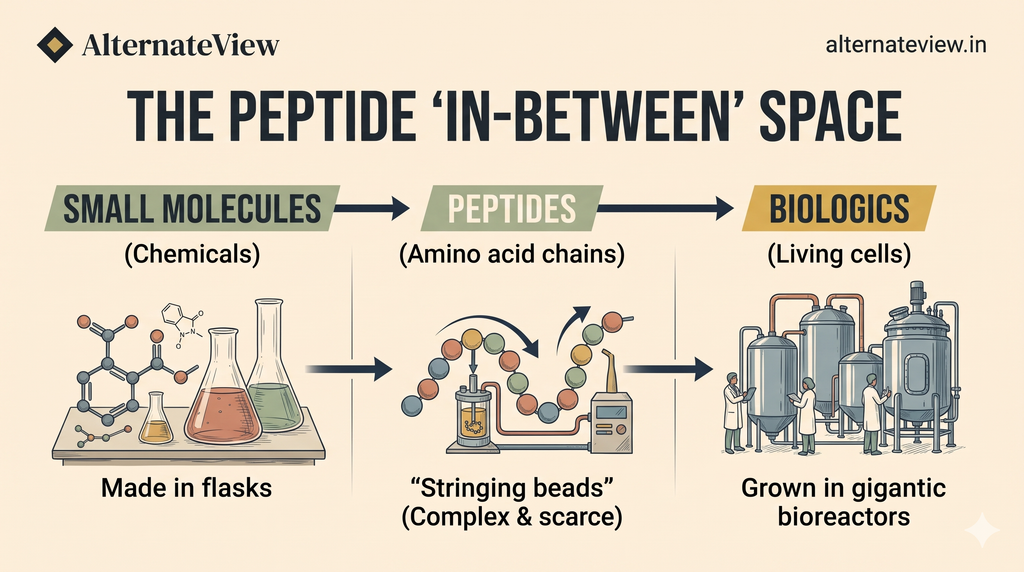
Peptides occupy a unique, somewhat awkward middle ground in medicine: they are too large to be simple small molecules, but too small to be full biological drugs.
If a traditional small-molecule drug is a single building block and a biological protein is a complex skyscraper, a peptide is a sturdy brick wall. Because they are basically chains of amino acids, manufacturing them usually requires a specialized chemistry called Solid-Phase Peptide Synthesis (SPPS) – a process akin to stringing beads onto a wire, one by one, inside a fluid column.
The chemistry itself isn’t new. But historically, peptides were a sleepy niche of the pharma world. Then came the GLP-1 weight-loss and diabetes gold rush.
The GLP-1 Catalyst: Why Peptides Matter Now
Practically overnight, the global demand for drugs like semaglutide (Ozempic) and tirzepatide (Mounjaro)—which are, at their core, peptides—skyrocketed. This created an unprecedented bottleneck: pharma companies had designed life-changing treatments, but they lacked the highly specialized infrastructure required to make them at a scale the world was demanding.
This brings us to the crucial rule of the CRDMO business: Sponsors don’t just outsource to save money; they outsource because they physically do not have the equipment or expertise to make these complex, mid-sized molecules.
And in a gold rush, the entity that owns the specialized shovels wins.
Why are Biologics Giants Buying Peptide Capability?
In July 2026, Samsung Biologics announced a $1.8 billion acquisition of PolyPeptide Group, a specialist peptide manufacturer with six global facilities and €389.3 million in 2025 revenue. To the casual observer, it is just another expensive corporate deal. But to the industry, this was a massive strategic plot twist.
Historically, Samsung Biologics is a giant associated with biologics – gigantic, multi-thousand-liter stainless-steel bioreactors used to grow living antibodies. That scale of manufacturing is fundamentally different from the delicate, “beads-on-a-string” chemistry required for peptides.
By spending $1.8 billion, Samsung was not just buying another factory; they were buying an entirely new “molecular language” they didn’t previously speak.
This is the core of the modern CDMO narrative: You can no longer just be “the chemical guy” or “the antibody guy.” As the molecules changing medicine change, the service providers must rapidly buy or build the specialized architectures required to handle them.
Samsung Biologics realized that to capture the massive wave of metabolic and obesity drug demand, they couldn’t wait years to build peptide facilities from scratch. They had to buy the capabilities.
Because in the modern pharma era, the molecule always determines the factory. If you don’t own the right factory, you don’t get to manufacture the future.
It is buying peptide capability. In other words: The modality map is changing the boundaries of the CDMO industry.
2.8 Antibodies: Finding the Sniper’s Bullet
Monoclonal antibodies (mAbs) are often celebrated as the crown jewels of modern biological medicine. Because they are grown using living cells, they can be designed to hunt down and attach to highly specific targets in the human body—like cancer cells—with incredible precision.
But as smart as an antibody is, it has a limitation: sometimes, it is just a seeker, not a destroyer. To solve this, scientists realized they didn’t need to replace antibodies. They just needed to arm them. This led to the rise of Antibody-Drug Conjugates (ADCs), one of the most exciting, high-value frontiers in pharmaceutical manufacturing.
An ADC is essentially a biological “smart missile” made by combining three things:
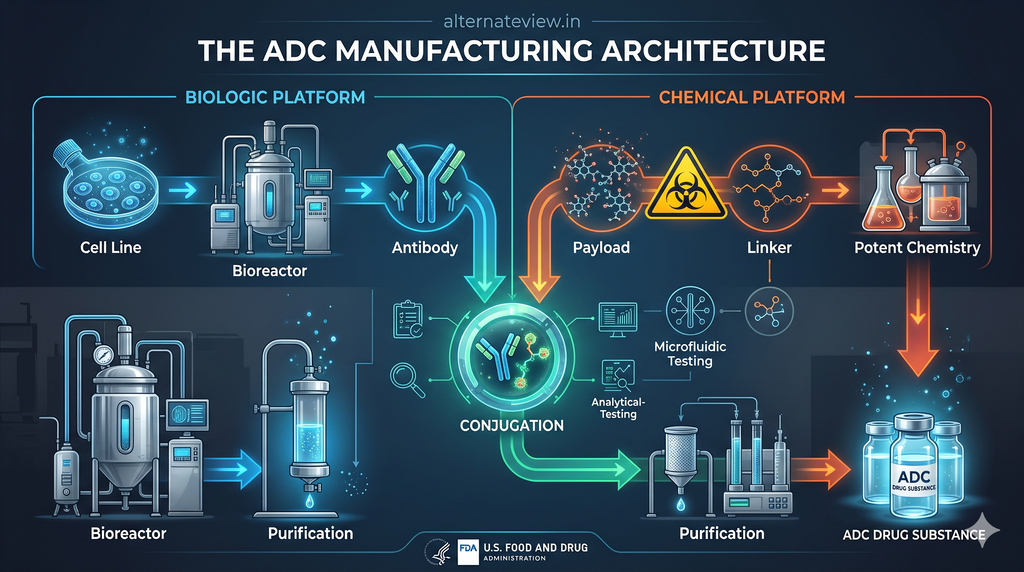
The Antibody (The Guide): A large, biological molecule that knows exactly how to find a target, like a tumor.
The Payload (The Warhead): A highly potent, toxic small-molecule drug designed to kill the diseased cell.
The Linker (The Fuse): A complex chemical bridge that holds the two together, ensuring the toxic payload is only released after the antibody reaches its target.
The Ultimate Manufacturing Culture Clash
An ADC sounds like the perfect medicine, but it represents an absolute nightmare to actually manufacture. Why? Because it requires two entirely different worlds of science to cooperate in the same process.
To make an ADC, a factory must first use large-scale biological bioreactors to grow and purify the delicate antibody (the “Large Molecule” world). Then, they must take that protein and chemically fuse, or “conjugate,” it to an extremely potent, highly toxic chemical payload (the “Small Molecule” world).
This is a culture clash of the highest order.
The biological part requires gentle, living conditions. The chemical part requires handling highly toxic “cytotoxic” substances that can be dangerous to the workers and the environment if not strictly contained.
Because of this, very few drug developers have the facilities to do both.
This bottleneck was highlighted in the FDA’s 2026 inspection guidance, which notes that conjugation has typically been performed by specialized manufacturing organizations (CDMOs) because the process is so distinct and hazardous. It requires combining biology and chemistry under one highly specialized, heavily contained roof.
For a CRDMO, ADCs are the ultimate competitive moat. Building a factory that can handle both the living biology of an antibody and the deadly chemistry of a payload isn’t just expensive—it requires a rare breed of operational mastery.
Once again, as medicine evolves, the “simple” antibody is no longer the end of the road. And as the molecules get more complicated, the factories must become even more extraordinary.
The strategic takeaway is clear: A manufacturer that can grow antibodies is not automatically an ADC manufacturer.
You cannot simply use your existing biological footprint to tackle these hybrid drugs. To bridge the gap between “natural biology” and “hazardous chemistry,” a CRDMO must layer an entirely new, highly specialized operational architecture onto its existing facility:
High-Potency Containment: Heavy containment suites to safely handle highly toxic chemical payloads.
Linker-Payload Synthesis: The precise chemistry required to manufacture the fragile bridge between the biological and chemical elements.
Conjugation Technology: The specialized skills needed to successfully fusion the antibody to its payload.
Complex Purification: Cutting-edge filtering systems to safely separate out unreacted payloads and unwanted byproducts.
Specialized Quality & Analytical Systems: Advanced, hypersensitive testing methods to verify the exact molecule ratio without contamination.
This is the recurring theme of the modern pharmaceutical era: The next modality doesn’t just create another product – it requires another capability stack.
A CRDMO can no longer rely on a single, standardized factory design. To capture the pipeline of tomorrow, they must continuously expand, adapt, and build the highly specific physical architectures that the molecules of today demand.
2.9 RNA, Gene Therapy, and Cell Therapy: Rewrite the Whole Rulebook
If Antibody-Drug Conjugates (ADCs) require a “culture clash” of biology and chemistry, the next wave of modern medicine demands something even more radical: throwing out the traditional manufacturing rulebook entirely.
This is the frontier of RNA, gene, and cell therapies. Here, the challenge isn’t just about scaling up chemical synthesis or growing large batches of cells—it is about handling delicate, genetic blueprints and living human tissue.
RNA: No Longer Science Fiction
RNA therapeutics (like the mRNA technology used in COVID-19 vaccines and a growing number of cancer and rare disease treatments) have rapidly graduated from experimental concepts to a major commercial reality.
As of late 2026, over two dozen RNA-based therapeutics have received FDA approval. This is a critical milestone: RNA is no longer a “niche scientific discovery.” It has officially become a standard manufacturing category.
But producing RNA comes with its own major hurdles:
Stability: RNA is notoriously fragile and breaks down easily.
Encapsulation (The Armor): Because it is so delicate, manufacturers must encapsulate the RNA inside microscopic fat bubbles called Lipid Nanoparticles (LNPs) so it can travel safely through the body.
Complex Synthesis: Unlike small molecules, you are synthesizing complex genetic codes, requiring incredibly high-purity environments to prevent any contamination.
For a CRDMO, this requires moving away from traditional reactors and invest heavily in specialized microfluidics, sterile packaging, and ultra-cold supply chains.
Cell & Gene Therapy: Treating a Patient, Not a Batch
Then we reach the ultimate frontier: cell and gene therapies.
Here, the manufacturing challenge becomes truly unusual. Often, instead of manufacturing a standardized product for millions of people, you are manufacturing a highly customized treatment, sometimes for one specific person.
Gene Therapy: Involves modifying genetic material to treat or cure a disease (often using engineered viruses as “delivery trucks” to carry the correct gene into a patient’s cells).
Cell Therapy: Involves taking a patient’s own immune cells, shipping them to a factory, genetically engineering them to fight a disease (like cancer), growing them in a lab, and shipping them back to the hospital to be infused back into the same patient.
In this model, the patient is both the starting material and the final destination. The “factory” is now integrated into an incredibly complex, time-sensitive “hospital-to-lab-to-hospital” logistics chain.
The Regulatory Frontier
The FDA has had to adapt rapidly to keep up with this scientific surge. By early 2026, the FDA’s Center for Biologics Evaluation and Research (CBER) had approved close to 50 cell and gene therapies over the previous decade.
Because these treatments are so complex and serve such small patient populations, traditional manufacturing rules can delay life-saving progress. Recognizing this, the FDA issued dedicated, highly anticipated guidance in May 2026 outlining “CMC” (Chemistry, Manufacturing, and Controls) flexibilities for human cellular and gene-therapy products.
This guidance essentially offered the industry “regulatory agility”—allowing developers to use prior scientific knowledge, progressive validating, and looser early-stage standards so they could bring these highly specialized, sometimes individualized, biological therapies to market faster without sacrificing safety.
For CRDMOs, this means the competitive edge is no longer just about raw volume or stainless-steel capacity. It is about speed, regulatory expertise, and the highly complex logistic chains required to process live, patient-specific biological materials.
In this new era, the company that masters the intricate journey from bedside to bench and back again is the one that will build the future of pharma.
here is another powerful signal coming directly from the factory floor.
In 2026, Samsung Biologics announced that its planned Bio Campus III in Songdo will house dedicated development and manufacturing facilities for next-generation therapies – including cell and gene therapies, bioconjugates, and antibody-based vaccines.
At the same time, the company completed a $280 million acquisition of its first U.S. biomanufacturing facility (adding 60,000 liters of capacity and pushing its global total to a massive 845,000 liters).
Why This Strategic Play Matters
The numbers are impressive, but the underlying strategy is what tells the real story.
Samsung Biologics isn’t just making a single big move; it is executing a simultaneous three-part playbook:
Massive Scale: Expanding sheer liquid volume to remain a global heavy-hitter.
Geographic Diversification: Establishing local footprint in key markets like the U.S. to protect against regulatory shifts and supply-chain shocks.
Modality Diversification: Building capability stacks for complex, high-growth drug classes beyond traditional antibodies.
This is the blueprint for the modern CRDMO. The era of relying solely on one giant, single-modality facility in one location is over. To lead the next era of drug manufacturing, service providers must build multi-modality, geographically resilient networks that can adapt wherever the molecule goes.
2.10 What Actually Changes for the Manufacturer?
Every modality needs different capabilities and face different challenges. We can now put the different modalities side by side.
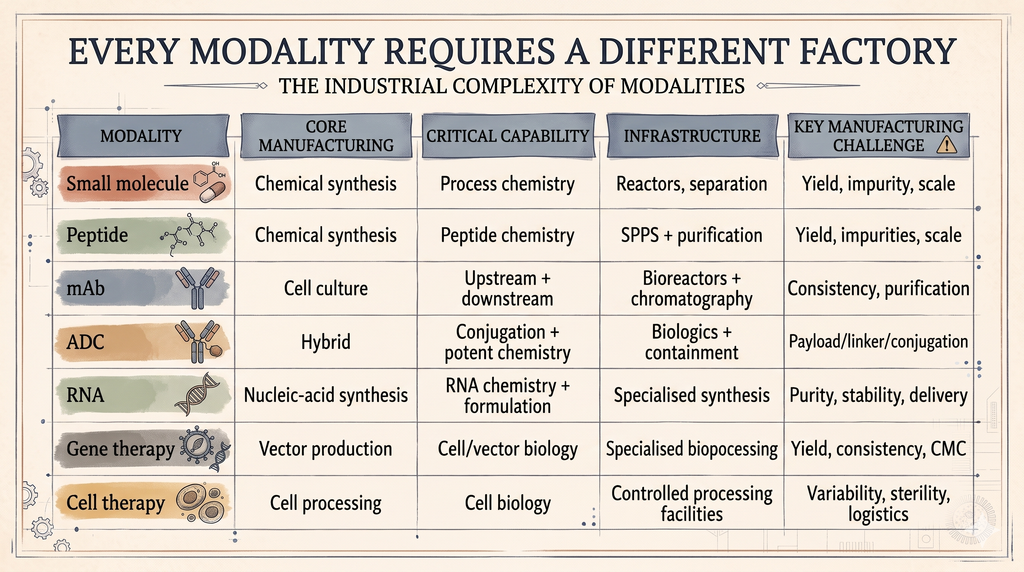
The table makes one thing clear: a CRDMO does not become more valuable simply because it owns more reactors. It becomes more valuable when it owns capabilities that are difficult for customers to reproduce internally. That distinction is central to understanding the economics.
2.11 From Molecule to Capability
This brings us back to the foundational proposition of the CRDMO model: a drug developer rarely outsources solely for lack of physical brick and mortar.
The physical plant is merely the baseline. True value lies in the technical and operational IP layer built on top of it.More often, outsourcing is driven by gaps in specialized infrastructure, operational expertise, or speed to market. A sponsor may lack:
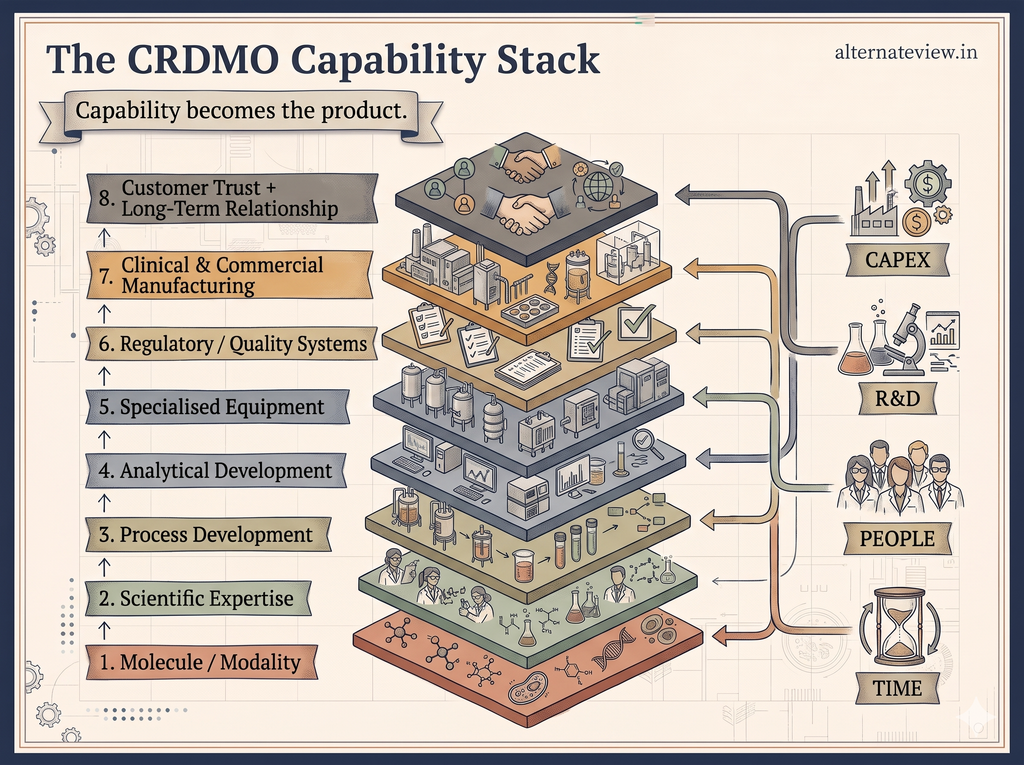
Human Capital & Know-How: Specialized synthetic chemists, process development engineers, analytical scientists, or biological manufacturing experts.
Specialized Infrastructure: High-potency containment systems, advanced equipment, or niche technological platforms.
Execution & Compliance: Institutional regulatory experience, available line capacity, or simply the long lead time required to build and validate these capabilities internally.
This is the real transition from CMO to CDMO to CRDMO. The factory does not disappear. It becomes one component of a much larger system. And that system takes years to build.
2.12 Why This Matters for CRDMO Economics
The Economics of Value Creation
This paradigm shift fundamental alters the underlying economics.
A conventional CDMO competes primarily on baseline operational metrics: capacity, cost, quality, and delivery. A sophisticated CRDMO, by contrast, competes across a broader, highly differentiated matrix: science, process knowledge, technology, quality, capacity, speed, and regulatory navigation.
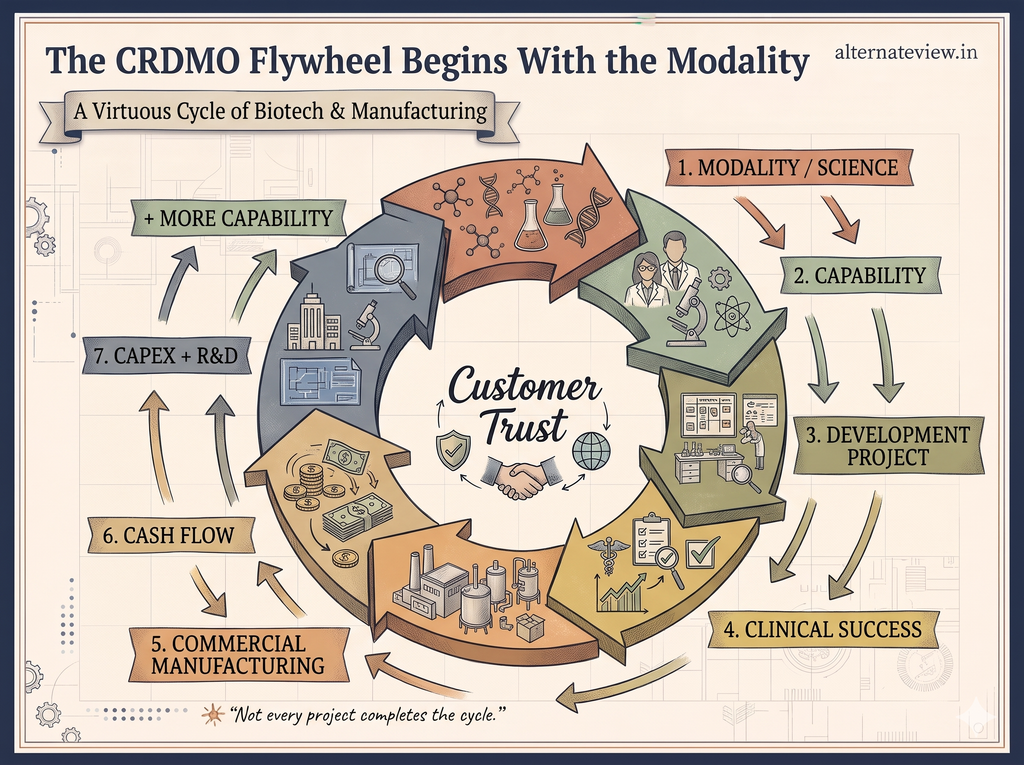
This distinction changes the strategic nature of the customer relationship. A client often enters through a modest early-stage development contract—a transaction that may carry minimal immediate revenue. However, if the underlying molecule achieves clinical success, that initial engagement unlocks a compounding, multi-phase lifecycle:
Development -> Clinical Supply -> Late-Stage Scale-Up -> Commercial Manufacturing -> Lifecycle Management
Consequently, an early development project functions as an entry option on a high-margin commercial relationship.
This dynamics explains why evaluating a CRDMO solely by aggregate pipeline volume is misleading. A firm can maintain hundreds of early-stage assets yet fail to generate meaningful commercial scale. Conversely, a peer with a smaller, higher-quality pipeline may capture exponentially greater value as its portfolio matures into commercial production.
Ultimately, economic value is not created by capacity alone. It is generated when proprietary capability converts into high-value customer projects, and those projects successfully convert into long-term commercial manufacturing.
Capital Allocation & the Uncertainty Problem
This is where the risk inherent to outsourcing becomes central to the thesis. Pharmaceutical development is probabilistic by nature; the vast majority of early-stage molecules fail to reach commercialization.
Consequently, a CRDMO must deploy upfront capital long before commercial revenue is assured. It must invest heavily to build:
Scientific Talent & R&D Labs: Specialized chemistry and biology capabilities.
Capital Infrastructure: Flexible small-molecule reactors, high-containment units, and large-scale bioreactors.
Services & Compliance: Advanced analytical testing platforms and deep regulatory frameworks.
It builds all of this infrastructure upfront, then waits to see which customer pipelines progress through the clinical trial funnel.
This dynamic illustrates why tracking aggregate CAPEX in isolation tells us so little. What matters is the strategic nature of that capital deployment. Is the expenditure merely adding another commodity reactor to an overcrowded market, or is it funding a proprietary capability that unlocks a higher-margin segment of the pharmaceutical value chain?
Understanding this distinction will be essential as we analyze how industry leaders – such as Divi’s Laboratories and Laurus Labs navigate capital allocation and pipeline conversion.
2.13 The Dual Divergence in Pharmaceutical Manufacturing
The pharmaceutical manufacturing landscape is moving in two distinct directions simultaneously.
On one side lies the volume baseline: the global healthcare system still relies heavily on massive quantities of conventional small molecules. Active pharmaceutical ingredients (APIs), intermediates, and generic drugs remain the bedrock of global supply chains—they are not disappearing.
On the other side lies a rapidly expanding, highly complex frontier of novel modalities:
Small Molecules: Depend on sophisticated chemical synthesis and process engineering.
Biologics (mAbs): Require advanced cell-line development, fermentation, and living-system control.
Antibody-Drug Conjugates (ADCs): Demand a convergence of both – mastering complex chemistry alongside biological conjugation and high-potency containment.
Peptides & Oligonucleotides: Rely on specialized solid/liquid-phase synthesis and complex purification platforms.
RNA, Gene & Cell Therapies: Create an entirely new frontier of vector production, lipid nanoparticle delivery, and delicate cold-chain orchestration.
Each of these modalities demands an entirely different manufacturing architecture, specialized containment standards, and unique process engineering.
This structural shift alters the fundamental mandate for outsourcing providers. The goal is no longer simply to build more volume capacity; it is to build proprietary capabilities that biopharma companies would rather buy than replicate internally. That distinction transforms contract manufacturing from a commodity service into a high-margin, sticky business model.
The Question We Carry Forward
The distinction between small and large molecules is merely a starting point. The far more decisive question for investors and strategists is: What specific capabilities does each modality demand—and who is building them first? That is where capital flows and long-term economic moats are created.
In this paradigm, market leadership will not automatically default to the firms with the largest physical footprint or highest reactor volume. Instead, the ultimate winners will be the CRDMOs that build the right technical capabilities early, earn customer trust, and embed themselves as indispensable partners as a molecule transitions from early development to global commercial scale.
This brings us to the next structural question: Why would global pharma giants—like Pfizer, Merck, or Novartis—hand off any part of this increasingly complex manufacturing journey to an external partner in the first place?
That is where the true economics of pharmaceutical outsourcing become far more compelling.
Leave a Reply