
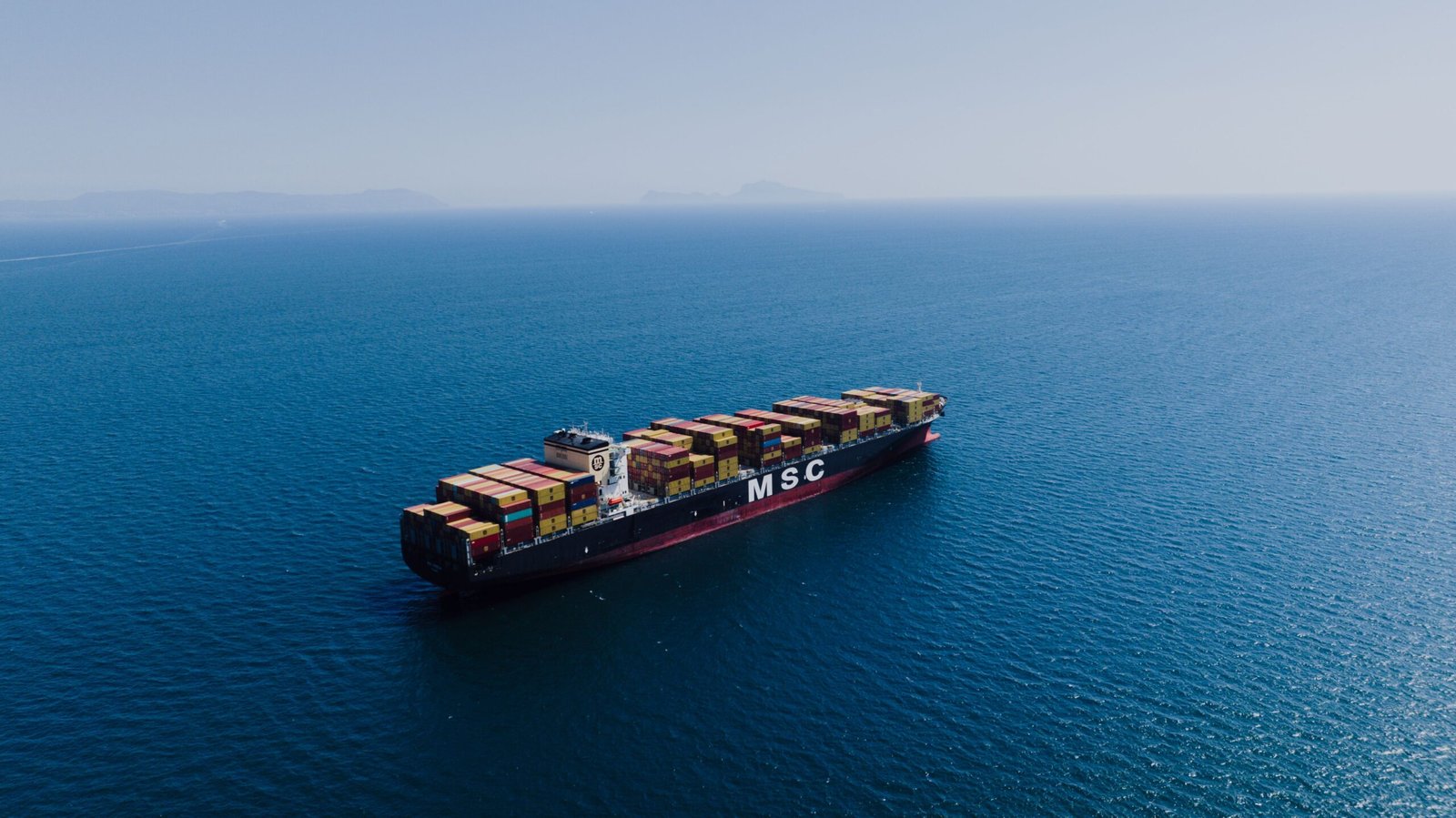
“Every product has two creators. The company whose logo you see. And the company that actually built it.”
Behind the Products You Already Own.
Most people might have never heard of Foxconn or its official name Hon Hai Technology Group.
Even if they did, they might not know exactly what it do. Yet there is a good chance the smartphone in their pocket, the laptop on office desk, or the gaming console under the television passed through one of its factories.
Founded in Taiwan in 1974 by Terry Gou with just US$7500. Foxconn began life making plastic knobs for black-and-white televisions
Fifty years later, it has become the world’s largest contract manufacturer, assembling products for Apple, Sony, Microsoft, Nintendo, Amazon and dozens of other global brands. During peak production cycles, it employs well over a million workers across its manufacturing network.
Despite that scale, no consumer walks into a store asking for a Foxconn phone.
Because Foxconn doesn’t sell products. It builds products that somebody else sells. That distinction is one of the defining features of the modern global economy.
Take for example an Apple iPhone.
The software and processor is designed by Apple in Cupertino, California.
The chips being fabricated by TSMC in Taiwan. The display panels from South Korea by Samsung or LG. The camera module from Sony in Japan. Memory from SK Hynix (S. Korea) or Micron (US).
Final assembly in either China, India or Vietnam.
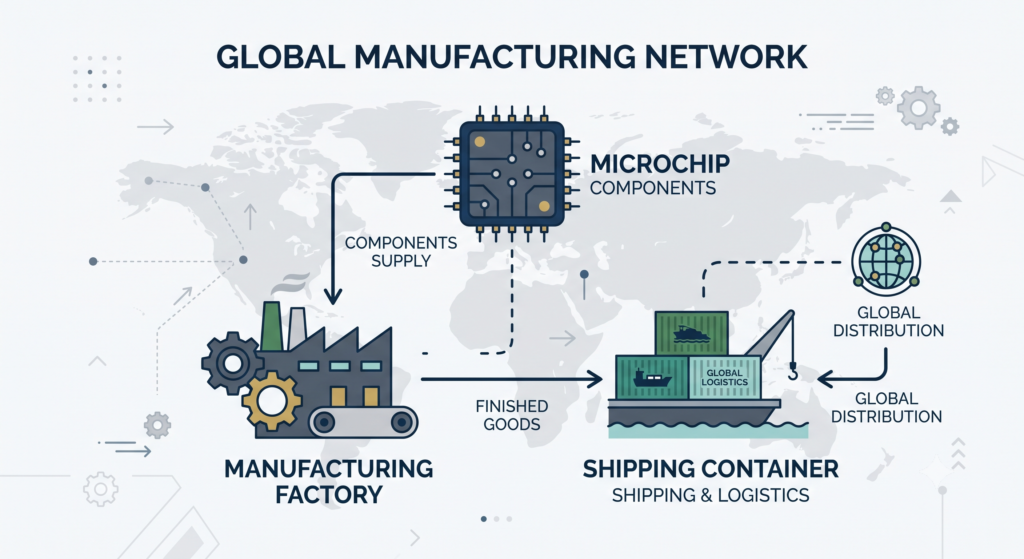
The finished phone could have crossed half a dozen countries before reaching your hand. Yet when the phone is sold, the overwhelming share of the economic value belongs to Apple. The company that physically assembled it operates on razor-thin margins.
This isn’t unique to Apple.
Nike doesn’t stitch most of its own shoes.
HP doesn’t own vast laptop factories. Bosch outsources products across categories. Pharmaceutical companies increasingly depend on specialist labs to develop medicines.
The pattern is everywhere.
Even the aisles of local supermarket are packed with household brands that don’t own the facilities making their goods.
Somewhere over the past four decades, the world’s biggest companies quietly stopped owning factories.
The real question we are exploring is – why so ?
When manufacturing everything made perfect sense.
For much of the 20th century, the corporate playbook in business was exactly the opposite.
If you wanted control, you owned everything. Few companies embodied this better than Ford.
In the 1920s, Henry Ford built what was arguably the most vertically integrated industrial empire the world had seen.
Ford didn’t rely on vendors. Instead, the company bought:
- Iron and Coal mines.
- Rubber plantations.
- Glass factories.
- Steel mills.
- Power plants.
- Proprietary railroads.
- Shipping fleets.
The famous River Rouge Complex in Michigan – a sprawling facility that quite literally took in raw iron ore at one end and produced finished automobiles at the other.

The logic was simple. Every supplier introduced uncertainty.
Internalizing the supply chain drove down costs, guaranteed availability and gave manufacturers complete control over quality.
Vertical integration wasn’t simply considered good management. It was considered the future of industrial capitalism.
The Invention That Disrupted Global Supply Chain.
Then something remarkable happened. The world became smaller. Not geographically, but economically.
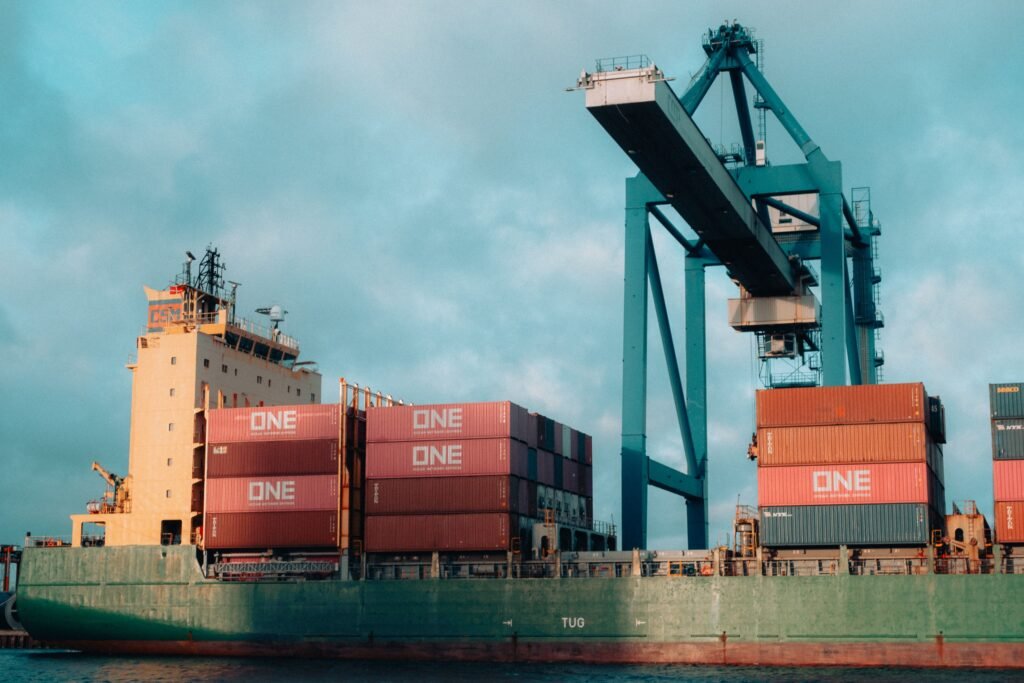
In April 1956, an American trucking entrepreneur named Malcom McLean loaded 58 standardized shipping containers onto a converted oil tanker called the Ideal X.
Few people noticed. Economic historians now consider it one of the most important commercial innovations of the twentieth century.
Before containerization, cargo was loaded manually, piece by piece. Ships could spend days sitting in port. Goods were damaged, and theft was common.
Transportation costs were so high that manufacturing products thousands of kilometres away often made little economic sense.
Standardized containers changed everything. Loading times fell dramatically and handling costs collapsed.
A product could now be manufactured in one country, assembled in another and sold in a third without becoming prohibitively expensive.
Global supply chains suddenly became commercially viable.
Containerization did for manufacturing what the internet did for information: It made distance far less important.
When the Factory Became Someone Else’s Problem
The second revolution arrived in the 1980s and 1990s.
Computers weren’t simply changing offices, they were rewiring global supply chains & factories.
A company headquartered in California could now coordinate suppliers in Japan, monitor inventories in Taiwan and manage assembly lines in China almost in real time.
Manufacturing no longer had to happen next door; It only had to happen efficiently.
Simultaneously, consumer markets became growing fiercely competitive – Product life-cycles shortened, technology evolved faster, and customers demanded endless choice
Factories, however, remained what they had always been – expensive, capital-intensive assets that couldn’t easily be switched on or off.
Slowly but surely, the economics of making your own products were beginning to shift.
Imagine being the CEO of a global electronics company in the late 1990s facing two choices.
Option A: Spend billions building factories, hiring thousands of workers, and stressing over idle assembly lines whenever demand dips.
Option B: Let a specialist handle the heavy lifting while you focus purely on design, software, and building a global brand.
Both companies can still sell the same smartphone, but only one has to worry about whether memory chip prices double next quarter.
Increasingly, that became an easy decision. Companies realised something profound.
Manufacturing is no longer a competitive advantage. Owning the customer is.
That realization fundamentally changed the nature corporate strategy. Businesses stopped asking – “How do we manufacture better ?” They started asking –“What is the highest-return activity that only we can do?”
The answers defined the modern economy.
Nike doubled down on marketing and brand equity. Apple focused on proprietary design and software ecosystems. Pfizer prioritized R&D and intellectual property over operating physical drug production lines.
Manufacturing became a specialized service, one could outsource. Brands no longer viewed physical factories as strategic differentiators, but rather as commoditized infrastructure.
The Rise of the World’s Factory
But someone, however, still had to actually own the factories. For nearly thirty years, that someone was China.
While the developed world outsourced production, China did the opposite – it doubled down on manufacturing.
Beginning with Deng Xiaoping’s economic reforms in 1978, the country spent decades building ports, highways, power grids, and sprawling industrial zones at a scale the world had rarely seen.
As foreign manufacturers arrived, their suppliers naturally followed. Component makers clustered around massive assembly plants, logistics smoothed out, and costs plummeted.
As those costs fell, even more companies shifted their production overseas, creating a massive, self-reinforcing ecosystem.
By the early 2000s, China had cemented its status as the world’s factory floor. It was no longer just exporting finished goods, it had industrialized the very capability of manufacturing at scale.
India Watched From the Sidelines
India largely observed this macroeconomic shift from the periphery.
It wasn’t until 1991, more than a decade after China began opening up that India finally liberalized its economy
Over the next thirty years, the two nations diverged sharply, becoming known for entirely different strengths.
China became synonymous with factories. India became synonymous with software.
While Shenzhen evolved into the world’s electronics capital, Bengaluru became the world’s back office.
Manufacturing certainly didn’t disappear in India, but it never became the massive growth engine policymakers had envisioned.
For much of the past two decades, manufacturing has hovered stubbornly around 15% to 17% of India’s GDP – well below the benchmarks set by East Asian powerhouses during their own industrial booms.
India produced engineers. China produced ecosystems.
The “China+1” Imperative
Then the world changed again. The first shock came from the US-China trade conflict. The second came from COVID-19.
Factories shut their doors, ports closed, and semiconductor shortages crippled automobile production worldwide, all while container freight costs surged to record highs
Companies that had spent decades optimizing supply chains for efficiency suddenly found themselves scrambling to optimize for resilience.
At the same time, geopolitics entered the boardroom. Policymakers began asking uncomfortable questions.
Should the global supply of critical pharmaceuticals or consumer electronics remain heavily concentrated in a single geography or diversified ?
The answer increasingly became diversified.
This imperative to diversify strategic manufacturing capacity birthed the “China+1” framework – a risk mitigation strategy designed not to abandon Chinese manufacturing, but to systematically reduce over reliance on a single point of failure.
India’s – The Second Window of Opportunity
For the first time in nearly three decades, multinational companies were actively looking for another large-scale manufacturing destination.
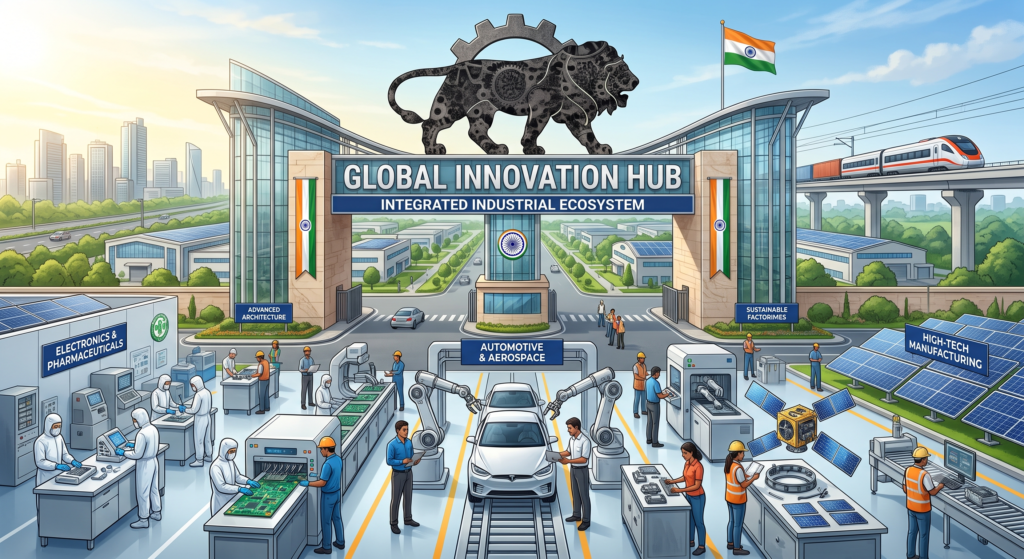
India happened to be transforming at exactly the same time, offering a powerful combination of new advantages:
- Production Linked Incentive (PLI) schemes backed by Govt.
- Expanding industrial corridors and improving logistics.
- World-class digital infrastructure.
- A massive engineering workforce.
- A captive domestic market of over 1.4 billion consumers
For the first time in nearly three decades, multinational companies were actively looking for another large manufacturing destination.
None of these, individually, would have been enough.
Together, they created a window of opportunity that had not existed before.
For perhaps the first time since liberalisation, global demand for manufacturing diversification aligned with India’s own industrial ambitions.
Owning the Factory vs. Owning the Profit
It is tempting to stop the story right here: India is becoming the world’s next great manufacturing hub, contract manufacturers will inevitably benefit, margins will rise, and everyone will smoothly move up the value chain.
That is the popular narrative but also an incomplete one: Because manufacturing is not a single business.
Building an iPhone for Apple is economically very different from developing a pharmaceutical process for Pfizer. Making shampoo for Hindustan Unilever is different from designing electronics for an aerospace company.
Some manufacturers own nothing but factories. Others own process know-how, regulatory approvals, engineering expertise or intellectual property.
Some earn extraordinary returns despite razor-thin margins. Others earn much higher margins while tying up enormous amounts of capital.
Understanding those differences – not simply identifying who owns the factories – is what separates a manufacturing story from a manufacturing investment.
And that is where our journey begins…
Leave a Reply